


The short answer
There are three types of log splitter, and they solve different problems. A splitting axe is the cheapest option but requires technique, space and a strong back. A manual splitting stand splits in a controlled way with a hammer, without swinging and without power. A hydraulic machine is for anyone who needs to work through cubic metres of logs.
If you mainly make kindling and smaller logs for the fireplace, the splitting stand is the logical choice. It's also the only type we stock, and you'll find it under fireplace accessories.
If you're processing a whole winter's worth of logs, buy a machine. We don't sell those, and we'd rather be upfront about that than have you go home with the wrong tool.
The three families, and what they cost in effort
The splitting axe. Fast, cheap, and you don't need anything else. But you have to aim well, you need about a metre and a half of clear space around you, and if you miss, the axe can bounce off. For anyone skilled with one, it's a perfectly good tool.
The manual splitting stand. You place the log in a cast iron ring with a blade above it, strike the blade, and the wood splits straight down the middle. No swinging, no power, no bouncing axe. You stand right next to it, so you can aim precisely where the grain runs.
The hydraulic log splitter. Electric or petrol-powered, vertical or horizontal, with a tonnage between four and twenty tons. It splits through anything, but it weighs dozens of kilos and costs several times as much.
So work out first how much you actually burn. For a fireplace that's lit two evenings a week, a machine is overkill.
What you need to split wood yourself
The Houtklover Gietijzer (Ø24 cm) is the standard model in that middle category. Solid cast iron, hammer included, and it handles logs up to around 24 centimetres in diameter. Set it freely on a sturdy surface or mount it in place.
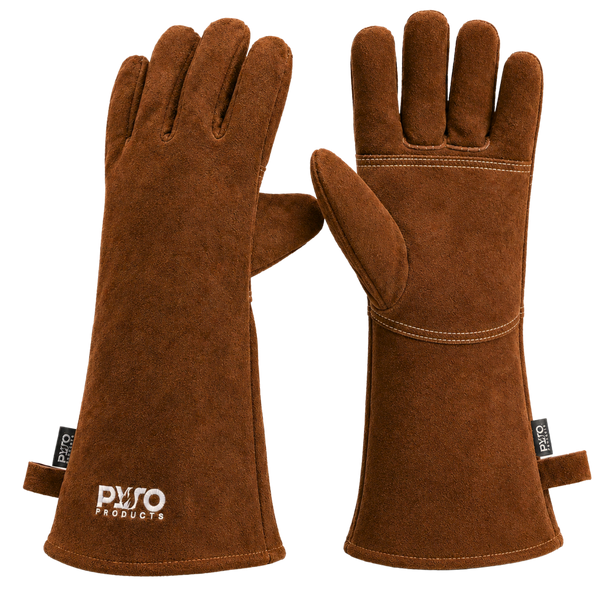
Gloves aren't a luxury. Fresh wood splinters, and you'll be using the Hittebestendige Handschoenen Leer at the fireplace again afterwards anyway.
And you'll need somewhere to store the split wood. A Houtmand Vilt (60 litre) next to the fireplace lets the split wood dry out further, which makes a noticeable difference when lighting it.
Want the complete package? The Haard Premium Pakket includes the splitter along with gloves and firelighters.



The three families side by side
cheapest · requires technique and space · risk of bouncing · no maximum diameter
controlled striking · no power needed · up to about 24 cm · 5.0 out of 2 reviews
4 to 20 tons · vertical or horizontal · dozens of kilos · for cubic metres of logs
splitting stand only · 84.95 euros · we don't sell machines
Which suits your situation
You make kindling from firewood you've bought. Log splitter stand. You split thicker logs down into manageable strips, then light them with firelighter wool.
You occasionally get a wheelbarrow of wood from someone you know. Also a log splitter stand, or an axe if you already have one lying around.
You have a wood stove that burns all winter. Reckon on several cubic metres. A hydraulic log splitter eventually becomes cheaper than your back.
You live in a flat with a balcony. A log splitter stand, since swinging an axe isn't an option there and a machine won't fit up the stairs.
Your wood is knotty or oak. Knots take strength. A stand gets through with a few extra blows; with heavy knots, the machine wins.
How to make splitting much easier
Most of the hard work isn't down to the tool but the technique. Split along the grain, not across it: look at the cracks already in the end grain and set your blade there.
Work from the outside in. Trying to split a thick log straight down the middle in one go takes far more force than taking off slices along the edge one at a time.
Set your splitter at working height. Working on the ground means bending for every blow, and you'll feel that after twenty logs. An old tree stump or a sturdy plank on a pallet is enough.
And split where the wood needs to end up. Moving split wood twice is double the work; we place the basket right next to it and throw everything straight in. More on what you need next can be found under fireplace lighters.
What to look for when buying
Diameter. With a stand, the ring is the limit. If your log doesn't fit, that's as far as it goes, and you'll need to saw it down first.
Material. Cast iron is heavy, and that's an advantage here: it stays put while you strike it. Sheet steel moves with the blow.
For a machine: tonnage and splitting length. Four tonnes is enough for ordinary firewood; for knotty oak, you'll want more. And check whether the length of your logs fits.
Fresh or seasoned. Fresh wood splits more easily than seasoned wood, so split it straight after sawing. We wrote more about that in top 5 fireplace lighters.
Frequently asked questions
That depends on your volume. For kindling and the odd log, a manual log splitter stand is the nicest option: controlled, no power, no swinging. If you're processing cubic metres of tree trunks, a hydraulic machine is the only serious option.
Up to the diameter that fits the ring. On our cast iron splitter that's around 24 centimetres. If your log is thicker, saw it lengthways first or use a machine.
Generally, yes. You don't swing, the log sits fixed in a ring and the blade is already in place. That removes the mishit, which is the biggest risk with an axe. Gloves are still sensible against splinters.
Fresh, so wet. The fibres are still loose then and the wood splits with less force. What's more, split wood dries far faster than a whole log, so you gain twice over.
Four to six tonnes is enough for ordinary birch or beech firewood. Knotty oak needs more; reckon on eight tonnes or higher. Higher tonnage also means a heavier, pricier machine.
Our conclusion
Most people searching for a log splitter don't need a machine. They want to make kindling and get a few logs down to size, and for that, the cast iron stand is quicker and safer than an axe.
If you burn enough wood to think in cubic metres, buy a hydraulic machine from a tool shop. That's a different purchase, and we won't pretend our splitter can handle that job.
Related articles
 Fireplace
Top down fire: lighting your fireplace from the top
 Fireplace
A gift for someone with a fireplace
 Fireplace
Firelighters compared: wood wool or paraffin blocks?
More articles like this?
New tips, product comparisons and exclusive offers straight to your inbox. Plus 10% off your first order.